
NHTSA Proposes Cyan Lights to Identify Self-Driving Cars
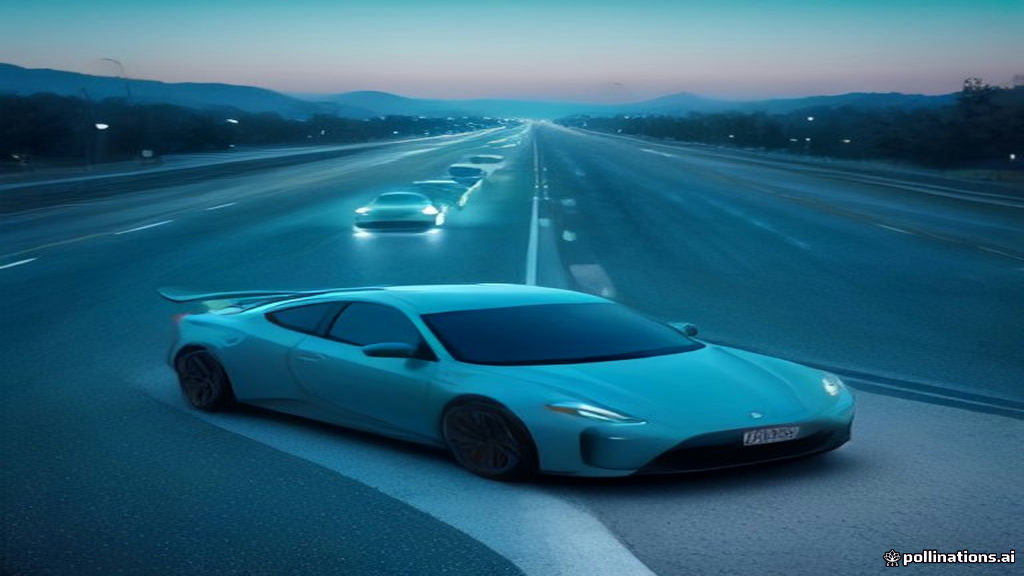
Spotting a car with no driver behind the wheel has always created a subtle moment of hesitation for pedestrians, cyclists, and fellow motorists. Without the reassurance of a quick glance or a nod from a human driver, figuring out whether an oncoming vehicle is under computer control or simply coasting can be tricky. U.S. federal safety regulators are now stepping in to solve this exact problem with a proposal that could change how self-driving cars communicate with the outside world.
The National Highway Traffic Safety Administration (NHTSA) has introduced new lighting guidelines strongly suggesting the use of steady cyan—a distinct blue-green shade—to signal when a vehicle is operating in fully autonomous mode without a human occupant supervising the road. While the proposal stops short of an instant, rigid mandate, it lays out precise engineering specs for where these lights must sit, the exact wavelength they must emit, and how they should behave in traffic.
This regulatory push arrives just as traditional automakers and tech startups alike are aggressively reshaping their software architectures, development timelines, and testing pipelines. As driverless cars move from experimental city pockets to mainstream roadways, establishing a universal visual language is quickly becoming an absolute necessity.
📌 Key Takeaways
- NHTSA proposed steady cyan lighting visible from all 360 degrees to clearly identify fully driverless autonomous vehicles.
- The rules establish strict placement and color standards, aiming to ease confusion for pedestrians and law enforcement.
- General Motors and Rivian are simultaneously overhauling their vehicle architectures and AI simulation pipelines to scale autonomy faster.
Updating Safety Standards for a Driverless Era
Federal motor vehicle safety standards were originally written decades ago for cars with steering wheels, gas pedals, and rearview mirrors. Today, purpose-built autonomous platforms like the Tesla Cybercab or Amazon’s Zoox robotaxi throw those traditional assumptions out the window by dropping manual controls entirely. The NHTSA’s proposed framework tackles this mismatch head-on by accommodating vehicles completely devoid of driver-centric hardware.
Under the guidelines, the cyan lights must remain steadily illuminated rather than flash, providing clear 360-degree visibility from the front, rear, and sides. This constant glow is designed to give immediate visual confirmation to anyone sharing the street that an automated driving system holds complete control. It removes the guesswork during tight crosswalk interactions or roadside traffic stops where people would normally look for a human driver’s eyes.
How Automakers Are Rebuilding for Autonomy
Beyond regulatory changes, the broader automotive industry is aggressively modernizing its engineering foundations to support advanced driver assistance systems. General Motors recently outlined a massive overhaul of its electrical and computational architecture, scheduled to debut in 2028 with the Cadillac Escalade IQ. This platform introduces custom conversational AI to replace legacy OnStar systems and supports hands-off, eyes-off highway cruising.
By embedding enterprise AI deeply into its internal workflows, GM has managed to slash its traditional four- to five-year vehicle development cycle nearly in half. Meanwhile, electric vehicle maker Rivian acquired U.K. artificial intelligence startup Third Dimension. The move aims to close the persistent “sim-to-real gap” by using generative AI to turn static images into hyper-realistic 3D worlds, allowing engineers to test autonomous algorithms against endless virtual edge cases safely.
Engineering the Hardware and Software Stack
Outfitting a commercial fleet with standardized exterior signaling is no small engineering feat. Solid-state LED modules must be robust enough to withstand extreme thermal swings while strictly maintaining the designated blue-green chromaticity coordinates. Photometric rules also dictate exact candela outputs, ensuring the lights remain visible in blinding midday sunlight without blinding pedestrians or drivers after dark.
At the same time, the computational brains running these vehicles are shifting away from fragmented electronic control units toward centralized domain controllers. This centralized compute topology reduces wiring harness weight, cuts power consumption, and supplies the heavy processing throughput required to run complex neural networks in real time. Cutting development timelines down to roughly two years drastically lowers capital expenditures, allowing automakers to bring advanced automated platforms to market much faster.
Global Expansion and Market Realities
The commercial market for robotaxis and automated transport continues to expand globally, though corporate strategies vary wildly. Waymo is scaling its footprint with planned commercial launches in international hubs like Madrid, Spain, alongside active airport shuttle services in Las Vegas. Meanwhile, ride-hailing firm inDrive partnered with Pony.ai and Nvidia to test autonomous robotaxis in Kazakhstan.
At the same time, economic pressures remain evident across the sector. Traditional manufacturers and EV startups alike must carefully balance heavy investments in software-defined vehicles against volatile macroeconomic conditions. Whether through regulatory mandates like the proposed cyan lights or massive software overhauls, the transition toward unsupervised autonomy is fundamentally transforming how vehicles are built, regulated, and experienced on public streets.
Frequently Asked Questions
Why is the NHTSA proposing cyan-colored lights for autonomous vehicles?
The agency wants to establish a clear, standardized visual signal for pedestrians, cyclists, and law enforcement to instantly recognize when a car is operating completely autonomously without a human supervisor.
Are these cyan lights currently mandatory?
The current proposal establishes strict equipment and placement specifications as an operational guideline rather than an immediate absolute mandate, signaling a major federal push toward uniformity.
How does the proposed lighting system function in traffic?
The cyan lights must remain steadily illuminated—not flashing—and offer 360-degree visibility so surrounding road users can easily identify the vehicle’s automated status from any angle.
What engineering challenges do these lighting requirements present?
Automakers must source specialized solid-state LEDs that maintain exact wavelength and brightness standards across harsh weather conditions without creating glare for other drivers.
Sources and further reading
Read the original reporting on TechCrunch Mobility.
