
Apple Launches First Touchscreen MacBook Pro Starting at $2,899
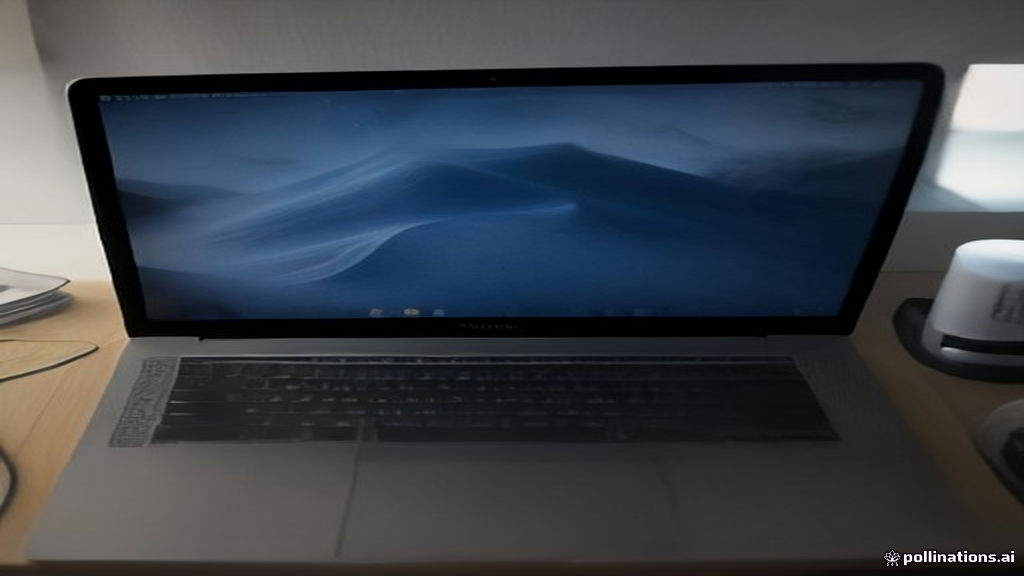
After years of public skepticism from leadership regarding touch-enabled laptops, Apple has officially introduced a MacBook Pro equipped with a touchscreen. Starting at $2,899, the new device marks a dramatic shift in company strategy, arriving nearly ten years after Apple first experimented with display-adjacent touch integration through the short-lived Touch Bar. The release represents a marquee product introduction for new CEO John Ternus, who also debuted the company’s foldable iPhone Duo earlier in the autumn.
The high-end portable computer arrives in both 14-inch and 16-inch configurations, completely rethinking the traditional laptop hardware paradigm. By pairing touch inputs with custom silicon architecture and advanced display engineering, Apple is targeting professionals who require both traditional desktop-class ergonomics and direct tactile interactivity. Preorders open on October 30, with retail availability slated to begin on November 6.
📌 Key Takeaways
- Apple’s new touchscreen MacBook Pro is available in 14-inch and 16-inch sizes, starting at $2,899 and $3,399 respectively.
- The laptops are powered by M5 Pro and M5 Max chips, supporting up to 128GB of unified memory and 16TB of storage.
- The new PROLED XDR Display delivers 2,000 nits of peak HDR and SDR brightness with a 10,000,000:1 contrast ratio.
- Preorders begin on October 30, and units hit store shelves on November 6.
Hardware Specifications and Performance Architecture
Under the hood, the new touchscreen MacBook Pro lineup relies on Apple’s next-generation M5 Pro and M5 Max silicon. Users can configure the machines with up to 128GB of unified memory and an unprecedented 16TB of onboard storage capacity. The hardware configuration enables heavy multitasking, complex video rendering, and intensive local AI processing workflows without breaking a sweat. When paired with intelligent software capabilities that streamline daily digital tasks, these laptops represent a major leap in mobile workstation power.
The visual centerpiece is the new PROLED XDR Display, which achieves a stunning 2,000 nits of peak brightness for both HDR and SDR content alongside a remarkable 10,000,000:1 contrast ratio. Replacing the traditional notch found on previous iterations, the screen features a modern Dynamic Island-style cutout. Audio performance has also received a substantial upgrade, featuring a six-speaker array integrated with a newly engineered woofer design.
Technical Mechanisms and Silicon-Level Touch Integration
The engineering challenge of adding touch capabilities to macOS required a fundamental rethink of how operating systems interpret multi-point touch inputs on desktop-class displays. Unlike mobile operating systems designed primarily for touch, macOS utilizes pointer-based precision. Apple solved this through a unified sensor grid embedded directly within the PROLED XDR panel substrate, rather than using an external capacitive layer that could degrade optical clarity. This in-cell touch architecture reduces parallax distortion by eliminating the air gap between the touch sensor and the light-emitting diodes.
At the silicon level, the M5 Pro and M5 Max processors feature dedicated display-processing engines optimized to handle high-refresh-rate touch polling simultaneously with complex graphics rendering. The operating system dynamically adjusts palm-rejection algorithms by utilizing the laptop’s internal gyroscope and accelerometer data. When the chassis detects physical stabilization from typing, accidental touch inputs on the lower portion of the screen are automatically filtered out. Meanwhile, active stylus input and finger gestures are processed with ultra-low latency through dedicated neural engine pathways.
Market Competition and Enterprise Workstation Benchmarks
Apple’s entry into the touchscreen laptop market immediately reshapes the competitive landscape for enterprise-grade mobile workstations. For years, Windows manufacturers such as Dell with its XPS line, Microsoft with the Surface Laptop Studio, and HP with its Spectre series have offered touch displays as a standard feature. However, these competing devices historically lagged behind Apple’s silicon regarding power efficiency and sustained performance under battery power.
Industry benchmarks indicate that while Windows touch laptops often suffer from thermal throttling when executing heavy rendering tasks while touch drivers are active, the M5 architecture manages thermal dissipation more efficiently. Enterprise creative directors and software engineers who previously maintained a dual-device ecosystem—using iPads for drawing and MacBooks for coding—can now consolidate their hardware workflow. The $2,899 starting price positions the touchscreen MacBook Pro significantly higher than standard enterprise laptops, testing whether corporate IT departments and independent professionals will pay a substantial premium for consolidated touch functionality on macOS.
Overcoming Ergonomic Challenges With Hinge Engineering
Historically, executives like Steve Jobs dismissed touchscreen laptops, famously calling vertical touch surfaces “ergonomically terrible” due to arm fatigue and screen wobbling. To solve this engineering hurdle, Apple developed a custom-designed hinge mechanism specifically tailored for this release. The hinge provides structural stabilization that locks the screen firmly in place when users interact with it using their fingers.
This stabilization architecture also serves a dual purpose during video calls. By preventing unwanted screen bounce, the hinge stabilizes the built-in camera even when users reach forward to tap or swipe across the display. The 14-inch model weighs 3.0 pounds (1.38 kg), while the larger 16-inch variant weighs 4.0 pounds (1.82 kg), making both models noticeably lighter than their non-touch predecessors.
Connectivity and Peripheral Support
Connectivity options remain robust for professional workflows. Both screen sizes include three Thunderbolt 5 ports, an HDMI port, an SDXC card slot, a traditional headphone jack, and a MagSafe charging port. Display output capabilities scale according to the internal silicon: the M5 Pro variant supports up to three external displays, while the M5 Max variant drives up to four external monitors simultaneously.
For mobile professionals relying on diverse hardware ecosystems—ranging from external storage arrays to advanced wired smart glasses—the inclusion of triple Thunderbolt 5 ports ensures lightning-fast data transfer speeds and versatile peripheral chaining.
Frequently Asked Questions
How much does the new touchscreen MacBook Pro cost?
The 14-inch touchscreen MacBook Pro starts at $2,899, while the larger 16-inch version starts at $3,399.
When can I buy the touchscreen MacBook Pro?
Preorders open on October 30, and the laptops will be officially available starting November 6.
What processors power the new touchscreen laptops?
The devices are available with either M5 Pro or M5 Max processor options, supporting up to 128GB of unified memory and 16TB of storage.
How does Apple prevent screen wobbling when typing or touching the display?
Apple engineered a custom dual-torque hinge mechanism specifically for the touchscreen models, which increases resistance dynamically when direct pressure is applied to the upper display assembly.
Sources and further reading
