
Woman with Recurrent Ovarian Tumour Welcomes Healthy Baby
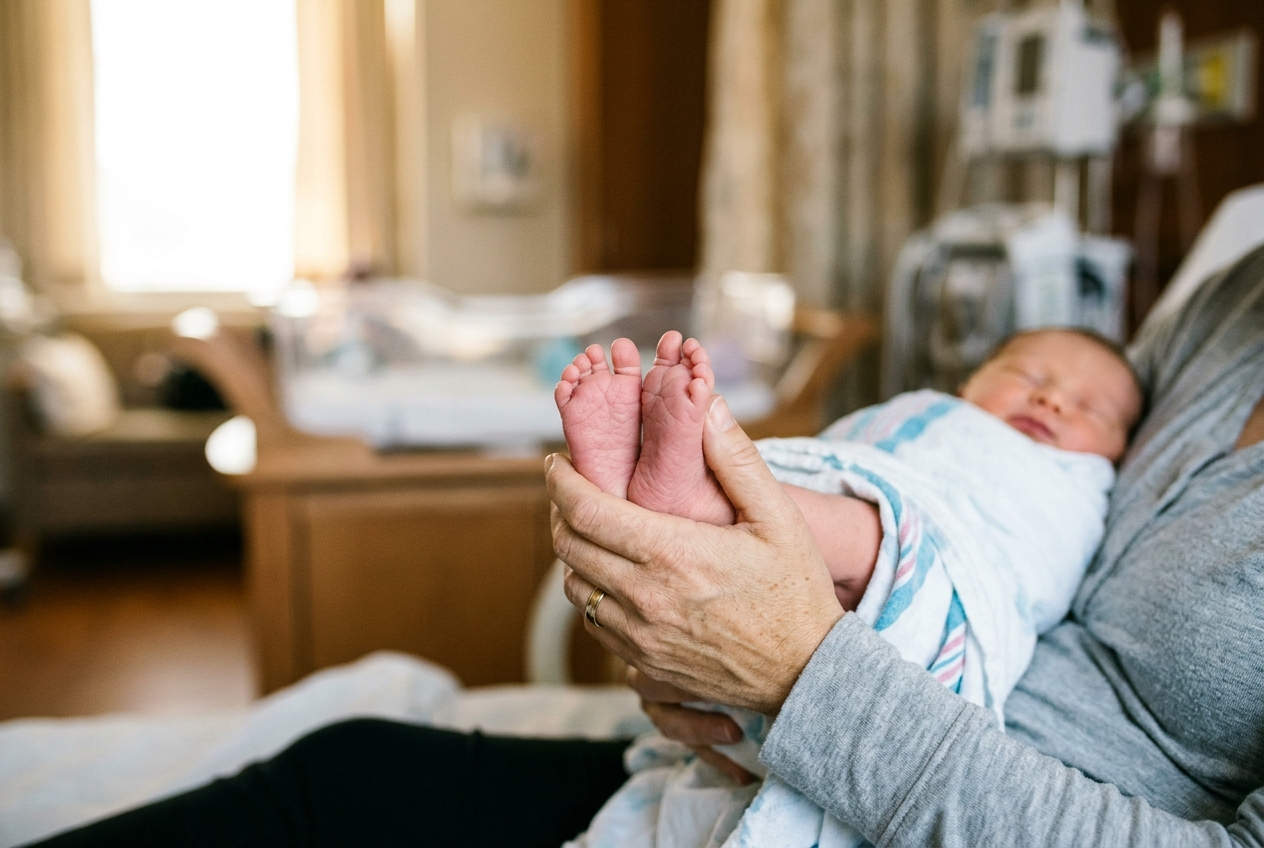
A remarkable medical case out of Bengaluru highlights how far reproductive medicine and cancer care have come when working hand-in-hand. A 32-year-old woman, facing the daunting reality of a recurrent borderline ovarian tumour alongside a very low ovarian reserve, successfully gave birth to a healthy baby. The achievement was made possible through specialized oncofertility treatment and in-vitro fertilisation (IVF), proving that treating aggressive conditions doesn’t always have to come at the complete cost of a patient’s future family planning.
Ordinarily, a recurring tumour in this region calls for radical surgery—removing both ovaries, the fallopian tubes, and surrounding tissue to eliminate any chance of cancer spreading. However, a multidisciplinary team took a different route. By carefully balancing oncological surveillance with targeted fertility preservation, doctors managed to harvest healthy eggs, navigate a series of medical hurdles, and ultimately achieve a successful pregnancy.
This case shines a light on the evolving field of oncofertility, where specialists push boundaries to protect reproductive options for patients facing complex cancer diagnoses. It is a story of precise timing, expert coordination, and the careful management of high-risk medical factors.
📌 Key Takeaways
- A 32-year-old woman with a recurrent borderline ovarian tumour and low AMH levels successfully delivered a healthy baby after specialized fertility treatment.
- Doctors utilized a low-oestrogen stimulation protocol and a natural-cycle frozen embryo transfer to minimize hormonal exposure and protect the patient.
- The treatment required close collaboration between gynecological oncologists and fertility specialists in Bengaluru to balance cancer management with reproductive goals.
Understanding the Medical Journey and Timeline
The path to a successful pregnancy was anything but straightforward. At age 30, the patient was first diagnosed with a borderline seromucinous ovarian tumour that featured microinvasion. Just 15 months later, an MRI scan spotted a large cyst in her left ovary, which required a second surgical procedure. Within three months, the tumour returned in the same ovary.
Realizing the complexity of her situation, she was referred to Milann Fertility and Birthing Hospital in Bengaluru. Initial scans painted a tough picture: a complex left- ovary cyst, only two visible follicles, an unvisualisable right ovary, and an anti-Müllerian hormone (AMH) level of just 0.6 ng/ml. In plain English, her ovarian reserve—the remaining supply of eggs—was critically low.
Despite these odds, specialists mapped out a two-stage plan. Because testing confirmed the tumour had not spread to surrounding tissues, doctors used a low-oestrogen stimulation protocol during IVF to limit hormonal exposure. After addressing a secondary hurdle—chronic endometritis, which was cleared with antibiotics and probiotics—the team performed a natural-cycle frozen embryo transfer. A single high-quality embryo resulted in a confirmed singleton pregnancy and, eventually, a successful delivery.
Key Medical Terms Explained
Medical terminology can often feel like a foreign language, but understanding a few core terms helps clarify how this success was achieved:
- Borderline Ovarian Tumour: Unlike fully aggressive ovarian cancer, these tumours show atypical cellular traits without the destructive invasion of surrounding tissue. This specific case featured microinvasion.
- Anti-Müllerian Hormone (AMH): A chemical biomarker produced by cells inside ovarian follicles. An AMH reading of 0.6 ng/ml signals a very low egg supply.
- Natural-Cycle Frozen Embryo Transfer: An IVF method where a frozen embryo is placed into the uterus during a normal menstrual cycle, completely skipping artificial hormonal stimulation medications.
- Chronic Endometritis: A persistent inflammation of the uterine lining that can block a fertilized egg from implanting properly. Treating it beforehand was crucial for the patient’s success.
The Balancing Act of Oncofertility
For decades, cancer treatment took absolute precedence over everything else, often leaving survivors facing involuntary childlessness and early menopause. Today, the specialized field of oncofertility aims to change that narrative by integrating family planning right into the oncology treatment plan.
When dealing with borderline ovarian tumours, surgeons traditionally lean toward total organ removal to stop the cancer from coming back. However, advances in imaging, conservative surgical techniques, and tailored hormone protocols mean doctors can sometimes preserve reproductive organs in select patients. Every decision requires a delicate weigh-in: oncologists must aggressively fight the disease, while reproductive endocrinologists work to salvage healthy cells without triggering rapid tumour growth.
This case proves that when anatomical preservation is safely possible, carefully calculated hormonal protocols can yield viable eggs even in a heavily compromised ovarian environment.
Frequently Asked Questions
What was the main medical challenge in this case?
The biggest hurdle was successfully treating a recurrent borderline ovarian tumour while preserving fertility for a patient who had a very low ovarian reserve and limited ovarian tissue remaining.
How did doctors protect the patient from excess hormones during IVF?
The medical team used a specialized low-oestrogen stimulation protocol during the IVF phase, followed by a natural-cycle frozen embryo transfer that avoided harsh external hormonal medications.
Did the ovarian tumour spread to nearby tissues?
Diagnostic testing confirmed that while the borderline lesion involved microinvasion, it had not spread to any surrounding tissues.
Where was this medical treatment carried out?
The procedure was managed by a multidisciplinary specialist team at Milann Fertility and Birthing Hospital in Bengaluru.
What impact did chronic endometritis have on the process?
Chronic endometritis causes inflammation in the inner lining of the uterus, which can prevent an embryo from implanting. Clearing this condition with targeted antibiotics and probiotics was a vital step before attempting the embryo transfer.
Sources and further reading
