
Why Keralam’s Paddy Fields Are Vanishing and What It Means
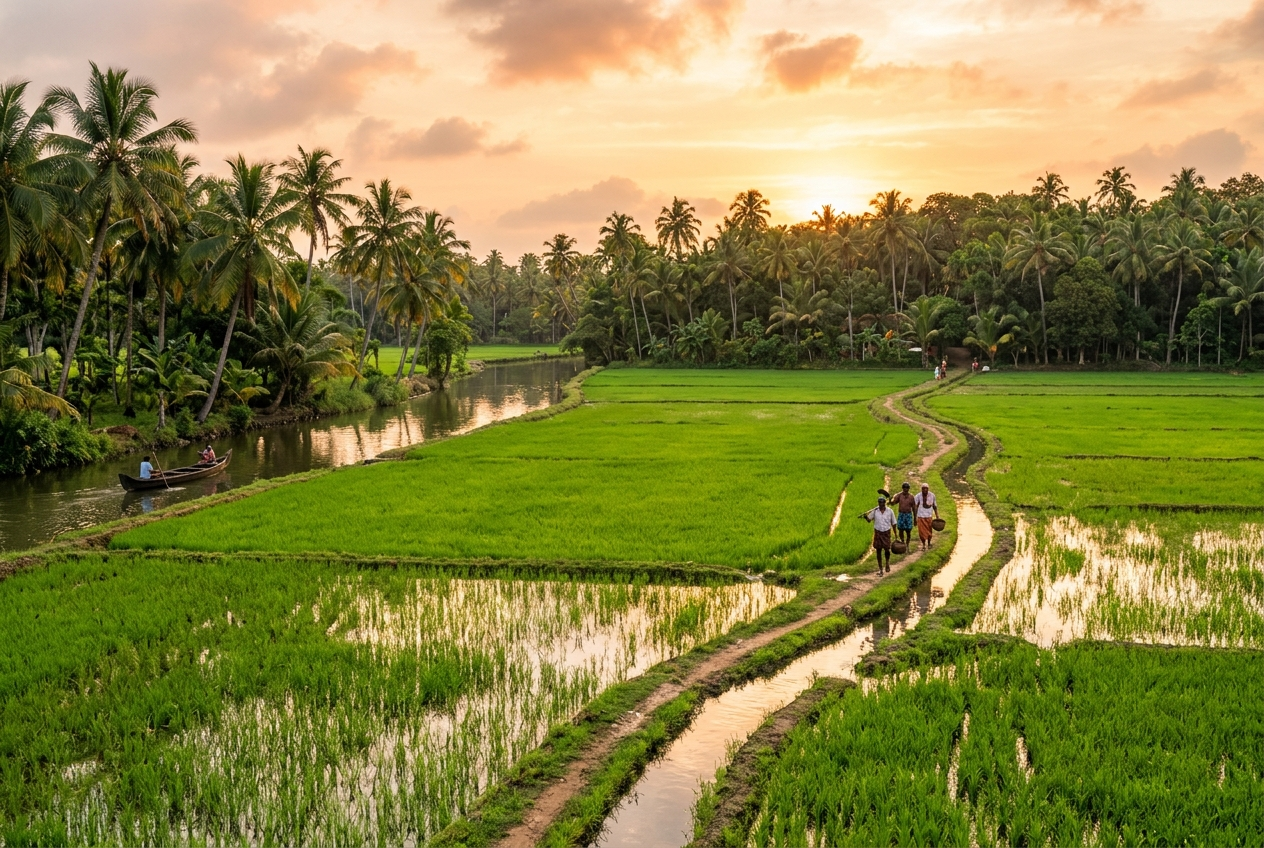
Paddy fields do far more than just grow rice. Across Keralam, these water-logged agricultural plots function as vital socio-ecological systems that regulate local biodiversity, manage delicate hydrological cycles, and stabilize microclimates. Yet, decades of administrative modifications, legal shifts, and economic pressures have severely squeezed conservation efforts. According to an expert op-ed published in The Hindu by Chitra K. P. and Preetha K. V., Keralam’s landscape has experienced an unprecedented contraction in paddy cultivation, raising urgent questions about long-term food security, groundwater health, and flood resilience.
Original Report: Readers can review the original publication via The Hindu’s report on paddy field conservation in Keralam.
📌 Key Takeaways
- Keralam’s paddy cultivation area plummeted from 8.82 lakh hectares in 1974-75 to just 1.76 lakh hectares by 2024-25, marking an 80% decrease.
- While the 2008 Kerala Conservation of Paddy Land and Wetland Act (KCPWA) aimed to protect wetlands, subsequent legal amendments and revenue circulars inadvertently paved the way for land conversion.
- The Department of Revenue acts as both environmental regulator and fee-collecting body, generating substantial state revenue from regularizations.
- Soil tests in key regions like Kuttanad have revealed aluminum levels far above safe limits, underscoring the deep ecological toll of agricultural neglect.
Historical Decline and Verified Agricultural Statistics
To understand the current crisis, look at the numbers. Data cited in the source report chart a sharp, continuous drop in land dedicated to paddy farming over a fifty-year span. Back in 1974-1975, the State recorded approximately 8.82 lakh hectares of active paddy fields. By 2024-2025, that acreage plunged to 1.76 lakh hectares—an 80% reduction.
This massive shift didn’t happen overnight. It has been driven by a combination of crop shifts away from traditional grains, expanding housing needs, commercial construction, and a booming speculative land market. As younger generations migrate toward non-agricultural professions, maintaining labor-intensive farming has become increasingly difficult for rural households, fueling the temptation to sell land for real estate development.
Legislative Framework and Administrative Loopholes
In 2008, the State enacted the Kerala Conservation of Paddy Land and Wetland Act (KCPWA) to put a hard stop to unauthorized wetland filling. Despite good intentions, subsequent legal adjustments carved out exceptions that weakened the statute’s bite.
A notable turning point came with the Section 3A Amendment via the Kerala Finance (No.2) Act, 2015. This change regularized unauthorized conversions that happened prior to 2008 in exchange for a nominal fee. Although Section 3A was eventually removed in a 2016 State notification, it left a backlog of unresolved cases. Furthermore, incomplete official databanks and the creation of pathways to convert unnotified lands—parcels listed as paddy in revenue records but missing from digital registers—have made it easier to secure building permits for residential and commercial projects without prioritizing water conservation.
Institutional Conflicts and Revenue Generation
Monitoring land use requires absolute independence, but structural frameworks often tell a different story. Until 2002, the Department of Agriculture oversaw non-agricultural land use. After the KCPWA came into effect, the Department of Revenue took over as the primary monitoring authority.
This setup creates an inherent conflict of interest. The Department of Revenue acts simultaneously as a conservation watchdog and a financial beneficiary, collecting up to ₹1,606 crore through paddy field regularizations up to 2024. Adding weight to these concerns, a 2016 revenue sector report by the Comptroller and Auditor General of India (CAG) highlighted widespread lapses, including unpunished illegal conversions, failure to report unauthorized land reclamation, and a lack of enforcement when it comes to restoring illegally filled plots.
Ecological Risks, Soil Health, and Flood Management
The loss of wetlands carries severe ecological repercussions. Paddy fields act as massive natural retention basins during monsoon seasons, soaking up excess rainwater and releasing it slowly to prevent destructive floods. When developers pave over or fill these basins, stormwater runoff accelerates, intensifying regional flooding.
Beyond hydrology, soil health suffers immensely. Soil tests conducted in Kuttanad, widely celebrated as Keralam’s rice bowl, revealed alarming aluminum levels ranging from 39 to 165 times above safe limits. Without healthy, functioning wetlands, the region loses its natural defenses against soil toxicity, declining groundwater tables, and climate volatility.
Frequently Asked Questions
What was the main purpose of the Kerala Conservation of Paddy Land and Wetland Act (KCPWA)?
Enacted in 2008, the KCPWA was designed to protect Keralam’s paddy fields and wetlands from unauthorized conversion, safeguard local water systems, and maintain ecological balance.
Why are Keralam’s paddy fields disappearing?
The sharp decline is driven by a mix of real estate speculation, commercial development, crop shifts, labor shortages in agriculture, and historical legal amendments that allowed unauthorized conversions for a fee.
How does the Department of Revenue impact conservation efforts?
The Department of Revenue serves as the primary land-use regulator while simultaneously collecting conversion and regularization fees, creating a structural conflict of interest that can hinder strict legal enforcement.
What do experts recommend to fix the issue?
Researchers and environmental advocates urge the state to complete its missing digital wetland databanks, strengthen monitoring mechanisms, enforce strict penalties for illegal land filling, and provide better support for traditional farmers.
Sources and further reading

Leave a Reply