
Government Jobs October 2026: 48,000+ Vacancies Announced
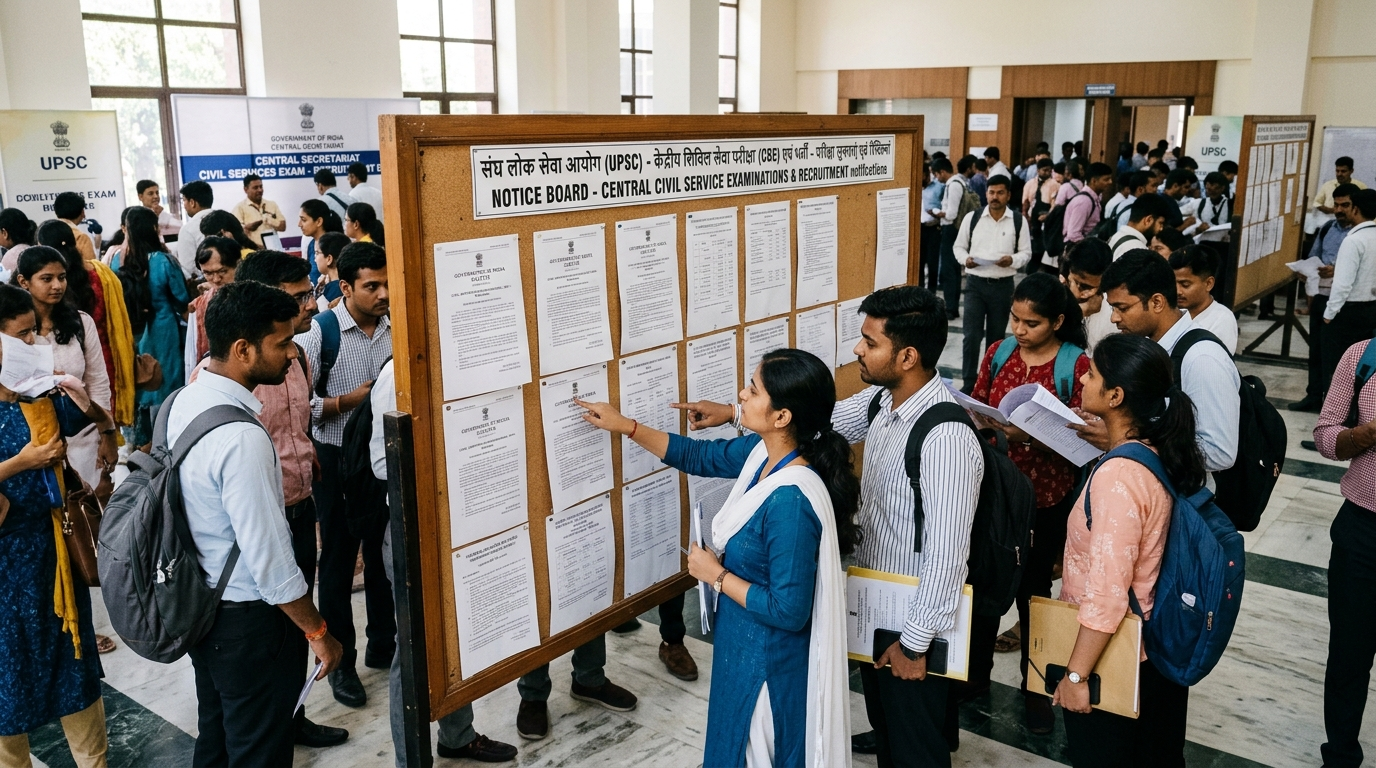
Job seekers looking to enter the public sector in India have a massive window of opportunity this month. Central and state government bodies, public sector banks, Indian Railways, and defense organizations have rolled out active vacancies totaling over 48,512 positions. Whether you hold a basic school qualification, an ITI certification, a technical diploma, or a post-graduate degree, current recruitment cycles cater to a wide spectrum of educational backgrounds.
Navigating this mountain of public sector openings requires knowing where to look and understanding how recruitment boards structure their drives. From the massive Teacher Recruitment Drive in Bihar (TRE-4.0) to specialized engineering roles and Railway Recruitment Board (RRB) openings, here is a complete breakdown of what is open, who is eligible, and how you can secure your application.
📌 Key Takeaways
- More than 48,512 active public sector job vacancies have been advertised for October 2026 across central and state bodies.
- Openings cater to diverse qualifications, including 10th/12th pass candidates, ITI/diploma holders, engineering graduates, and post-graduates.
- Major hiring segments feature Indian Railways (RRB NTPC), public sector banks, defense establishments, and state administrative commissions like BPSC.
- Candidates must strictly verify notifications through official government portals ending in .gov.in or .nic.in to avoid third-party errors.
Verified Breakdown of Openings by Sector and Qualification
Public sector recruitment announcements span multiple functional domains, addressing distinct qualification criteria. The available openings are categorized across educational attainment levels and operating sectors to help applicants streamline their job searches:
- Education-Based Allocations: Current listings feature roughly 10,000+ openings for 10th and 12th pass candidates, another 10,000+ openings designated for general university graduates, alongside specialized quotas for engineering graduates (5,000+), diploma holders (5,000+), and ITI/NCVT certified professionals (5,000+). Professional qualifications like MBA, MCA, and Law degrees also correspond to targeted recruitment listings.
- Sector-Specific Openings: Major employing sectors include Indian Railways, public sector banks, public sector undertakings (PSUs), defense establishments, police departments, agricultural research bodies, and state administrative commissions.
Notable centralized notifications highlighted in current employment reports include the Railway Recruitment Board (RRB) Non-Technical Popular Categories (NTPC) examinations—such as 3,548 graduate-level posts and 1,688 12th-level posts—alongside specialized roles in banking institutions, research centers, and state public service commissions like the Bihar BPSC teacher recruitment drive (TRE-4.0) featuring over 32,388 vacancies.
Understanding the Scale and Trends in Public Sector Hiring
Public sector recruitment in India represents a cornerstone of formal employment stability, offering structured career progression, pension benefits depending on the applicable scheme like the National Pension System, and standardized pay scales aligned with Pay Commission recommendations. The volume of over 48,512 active positions highlights the ongoing demand for human capital across civil administration, infrastructure management, public education, and financial services.
Analyzing the distribution of these jobs reveals structural priorities within the employment ecosystem. A significant portion of entry-level positions target candidates with basic secondary or vocational training, such as ITI certifications, ensuring that manufacturing, transport, and public utilities maintain a steady supply of skilled technicians and support staff. Simultaneously, large-scale administrative drives—exemplified by state teaching recruitment boards and national railway boards—address systemic shortages in education delivery and transit operations.
For candidates navigating this landscape, understanding the interplay between central and state recruitment boards is essential. While central agencies like the Union Public Service Commission (UPSC) or Railway Recruitment Boards (RRBs) advertise pan-India opportunities, state public service commissions and state police boards focus on localized domicile requirements and regional language proficiencies. Balancing applications across both categories requires careful time management, as examination schedules frequently overlap.
Essential Preparation Strategies for Competitive Government Exams
Preparing for competitive government examinations demands a disciplined, systematic approach. Because the application process involves strict adherence to bureaucratic protocols, candidates are advised to adopt proactive management strategies:
- Document Readiness: Ensure that all academic transcripts, identity proofs, category certificates including SC, ST, OBC, and EWS, and passport-sized photographs are digitized and formatted according to official portal specifications well before the application window closes.
- Syllabus Alignment: Map out the core subjects required for specific examinations, focusing on quantitative aptitude, logical reasoning, general awareness, and language proficiency. Utilizing standard reference materials and previous years’ question papers aids in identifying high-yield topics.
- Timeline Tracking: Maintain a dedicated calendar to track opening and closing dates for registration, fee payment, and correction windows. Missing a deadline by even a few hours typically results in outright disqualification, as automated portals shut down strictly at designated timestamps.
- Official Verification: Always cross-check fee amounts, age relaxation criteria, and medical standards directly from the official notification PDF rather than relying solely on third-party aggregators or social media summaries.
How to Navigate Central and State Application Portals Safely
For applicants new to the government job application process, navigating the fragmented landscape of recruiting websites can present a significant challenge. Central government jobs are typically advertised through distinct board portals, such as the Railway Recruitment Boards (RRB) for rail transport roles, the Staff Selection Commission (SSC) for various ministerial and departmental posts, and the Institute of Banking Personnel Selection (IBPS) for public sector banks. In parallel, state governments run their own Public Service Commissions such as BPSC, UPPSC, MPSC, and subordinate service selection boards.
To avoid fraudulent websites and phishing portals that mimic official government domains, applicants should always ensure that the URLs they visit end in secure government suffixes such as .gov.in or .nic.in. Relying on trusted aggregator summaries to learn about a notification is acceptable, but the final application submission and fee payment must always occur on the official, verified portal of the respective recruiting body.
Frequently Asked Questions
What types of government jobs are generally available in India?
Public sector employment opportunities span multiple tiers, including civil services administered by the UPSC, staff selection commission examinations, railway technical and non-technical cadres, public sector banking roles like clerks, probationary officers, and specialist officers, defense forces, and state-level police or teaching positions.
How can applicants verify the authenticity of a government job notification?
Applicants should cross-reference recruitment announcements directly with official government gazettes, employment newspapers published by the Ministry of Information and Broadcasting, or the dedicated official websites of the respective recruiting ministries, banks, or commissions.
Are application fees refundable if a candidate decides not to appear for the exam?
Generally, application fees paid to government recruiting bodies are non-refundable. However, many boards partially refund fees to candidates who successfully appear for the initial written examination or preliminary test, subject to the specific guidelines outlined in the official notification.
Can final-year students apply for graduate-level government vacancies?
Eligibility for final-year students depends entirely on the cut-off date specified in the official notification. If the notification states that the candidate must possess the requisite educational qualification on or before a specific date, students whose results are declared after that date will typically be rendered ineligible.
Sources and further reading

Leave a Reply