
Congress Jabs Modi Over Delhi Pollution With ‘AQI 400-Paar’ Slogan
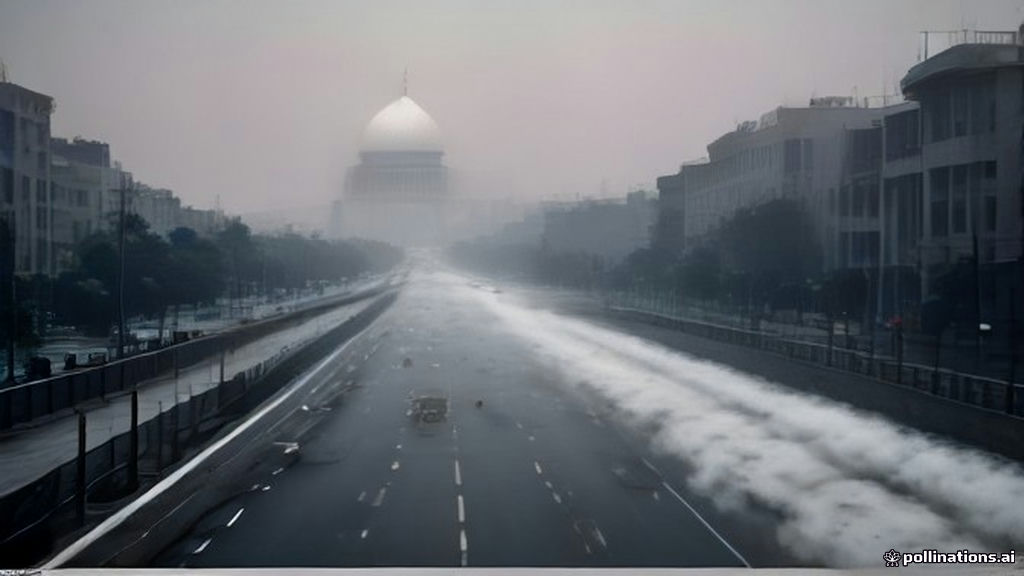
The severe deterioration of air quality in New Delhi has triggered a sharp political confrontation. On Saturday, November 14, 2026, the Indian National Congress launched a stinging critique against Prime Minister Narendra Modi, weaponizing his prominent 2024 Lok Sabha election campaign phrase to highlight the capital’s worsening environmental crisis. As dense smog blanketed the city and numerous monitoring stations flashed severe danger warnings, opposition figures argued that governance failures had turned the air toxic for millions of residents.
Congress general secretary Jairam Ramesh took to social media to direct his criticism squarely at the administration. Referencing the National Democratic Alliance’s previous electoral slogan, Mr. Ramesh posted in Hindi: “Abki baar, AQI 400-paar. The ‘pravachanmantri’s’ (preaching minister) slogan is coming true when it comes to AQI!” He asserted that the metropolis had effectively transformed into one of the most polluted urban areas globally, where basic breathing has become a hazard and public health infrastructure faces severe strain.
📌 Key Takeaways
- Congress leader Jairam Ramesh targeted PM Modi using a modified version of the 2024 “400-paar” election slogan.
- Delhi’s Air Quality Index crossed the 400-mark, placing multiple monitoring stations firmly in the ‘severe’ category.
- Vulnerable groups, including children and the elderly, are bearing the brunt of the toxic smog, driving up hospital admissions.
- Outdoor workers across the capital reported immediate physical distress, including persistent coughs, breathing difficulties, and burning eyes.
Political Fallout Over Public Health Crises
The latest political sparring underscores the escalating tension between central and state authorities regarding urban environmental management. According to verified data from monitoring stations across New Delhi, air quality consistently hovered within the hazardous 400-to-500 bracket over consecutive days. The city’s cumulative average breached the 400-threshold on Friday, November 13, 2026, forcing a severe emergency response posture.
Mr. Ramesh emphasized that political rhetoric during campaign trails stood in stark contrast to ground realities. “Slogans were tossed into the air; now the air itself has turned to poison,” he stated. The opposition pointed out that children and senior citizens are disproportionately affected by the toxic atmosphere, leading to a measurable surge in hospital visits for respiratory ailments, asthma exacerbations, and cardiovascular stress.
Atmospheric Physics and Economic Mechanisms Behind AQI Spikes
The Air Quality Index (AQI) translates complex concentrations of multiple pollutants—including particulate matter (PM2.5 and PM10), nitrogen dioxide, sulfur dioxide, and carbon monoxide—into a single numerical scale. When the index crosses the 400-mark into the ‘severe’ category, the concentration of fine particulate matter (PM2.5) is high enough to penetrate deep into the respiratory tract and enter the bloodstream.
Urban meteorology heavily dictates these seasonal spikes. Thermal inversions trap local emissions, vehicular exhaust, industrial pollutants, and regional stubble burning close to the surface, preventing dispersion. Unlike minor infrastructure malfunctions or temporary utility disruptions, resolving a regional atmospheric crisis requires sustained, multi-jurisdictional policy enforcement rather than quick technical patches.
From an economic perspective, chronic high-AQI events generate massive negative externalities. Productivity drops due to worker illness, healthcare expenditures surge, and commercial logistics face delays due to low-visibility fog conditions. Fixing these issues requires targeted capital allocation toward green public transport, clean industrial energy transitions, and subsidized agricultural machinery to prevent stubble burning at the farm level, shifting the economic burden away from reactive emergency measures toward proactive regional planning.
Enterprise Impacts and Global Benchmarks
Enterprise consumers and corporations operating in the National Capital Region face distinct operational hurdles during severe pollution episodes. Office parks and industrial manufacturing units must transition toward indoor operational protocols, deploy high-efficiency particulate air (HEPA) filtration systems, and occasionally restrict outdoor shifts to protect personnel. Companies providing remote work infrastructure experience spikes in software demand as corporate clients minimize physical commuting.
When compared with global industry benchmarks in major economic hubs like Beijing, London, or Los Angeles—which implemented aggressive multi-decade structural reforms to curb urban smog—Delhi’s crisis highlights structural gaps in inter-state coordination. While cities like Beijing successfully reduced PM2.5 concentrations through centralized industrial emission caps and strict regional zoning laws, India’s federal structure often diffuses accountability across central, state, and municipal governing bodies.
Chronological Background of Northern India Air Quality Crises
The escalation in mid-November 2026 marks a recurring annual crisis point for northern India, tracing back through a well-documented timeline of policy debates, judicial interventions, and seasonal meteorological triggers.
- October to November (Stubble Burning Phase): Post-monsoon harvesting of paddy crops in neighboring states of Punjab and Haryana results in millions of tons of agricultural residue being burned in open fields, coinciding with falling autumn temperatures.
- Late November to December (Inversion and Fog Phase): Surface wind speeds drop significantly, and the onset of cold weather creates an atmospheric lid that traps gaseous and particulate pollutants close to the ground, pushing AQI levels past 400 for weeks at a time.
- January to February (Emergency Interventions): Implementation of the Graded Response Action Plan (GRAP), involving temporary bans on construction, diesel generator restrictions, and truck entry prohibitions into Delhi.
- Projected Future Milestones (2028–2030): Long-term infrastructure targets include the full electrification of public bus fleets across northern states, expansion of the regional rapid transit systems (RRTS), and enhanced satellite monitoring networks to track agricultural fires in real time.
Real-World Impacts on Daily Life and Workforce Vulnerability
For everyday citizens, navigating Delhi during a severe AQI event alters daily routines fundamentally. Outdoor laborers, delivery personnel, traffic police, and construction workers face immediate health hazards, reporting persistent dry coughs, severe eye irritation, throat congestion, and acute breathing difficulties. Unlike corporate office workers who can utilize indoor air filtration systems, the city’s massive informal workforce remains exposed to ambient pollutants throughout long shifts.
Healthcare facilities across the National Capital Region report receiving higher volumes of patients presenting with acute respiratory distress. Pediatric and geriatric wards witness the sharpest increases in occupancy. Public health experts continue to advise vulnerable populations to remain indoors, deploy N95 respirators if transit is unavoidable, and avoid strenuous outdoor exercise until meteorological conditions facilitate pollutant dispersion.
Frequently Asked Questions
What does an AQI above 400 mean for health?
An Air Quality Index (AQI) reading between 400 and 500 falls into the ‘severe’ category. It poses serious health risks for the general population and severe health impacts for individuals with pre-existing heart or lung conditions, children, and the elderly. Exposure can cause severe respiratory distress even in healthy adults.
Why does Delhi’s pollution worsen significantly in November?
Delhi’s air quality typically plummets in November due to a combination of regional stubble burning, lower wind speeds, falling ambient temperatures, and a meteorological phenomenon known as inversion, which traps pollutants close to the ground.
How did the Congress party utilize the Prime Minister’s slogan?
Congress leader Jairam Ramesh adapted Prime Minister Narendra Modi’s 2024 Lok Sabha election slogan, “Abki baar, 400-paar,” to mock the administration over the capital’s air quality index surpassing the 400-point threshold.
What emergency measures are typically enforced when AQI crosses 400?
When the AQI enters the severe category under the Graded Response Action Plan (GRAP), authorities typically halt non-essential construction, ban entry of older diesel commercial vehicles, restrict specific industrial operations, and consider shifting schools to online learning formats.
Sources and further reading
Read the original report on The Hindu.
