
Tesla Cybercab Pre-Orders Open With $299 Fee and Strict Limits
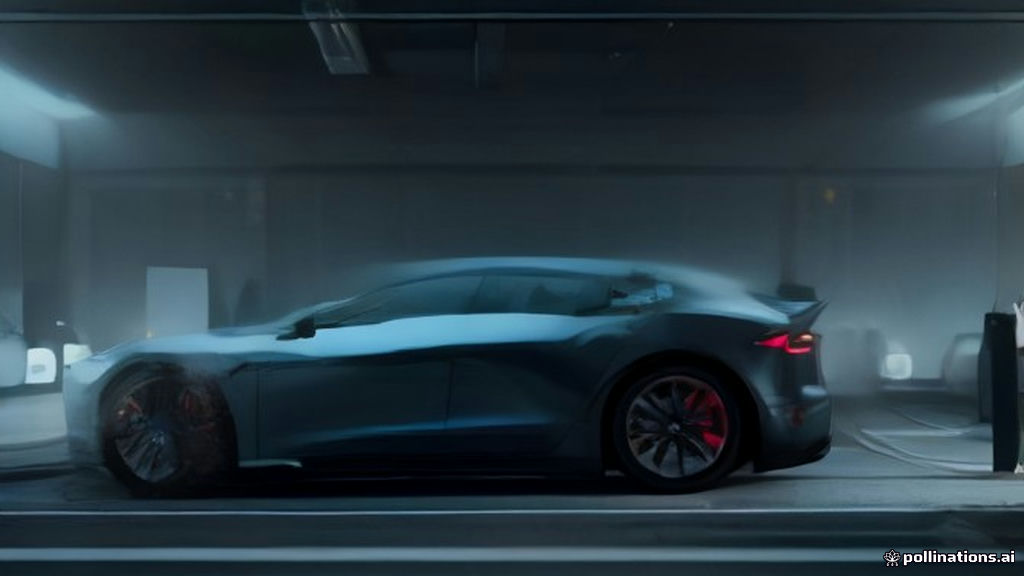
Tesla has officially kicked off pre-orders for its highly anticipated, steering-wheel-free Cybercab for personal use, bringing the futuristic vision of autonomous transit a step closer to reality. Unveiled during a live rollout, the vehicle carries an eye-catching base price of $29,990. However, early reservation holders digging into the fine print quickly discovered a web of strict operational limits, regional restrictions, and a recurring monthly fee.
As tech reviewers and early buyers parsed the order page details, it became clear that Tesla’s next-generation transit fleet is launching with a tightly controlled, highly restricted deployment phase. Set for an estimated delivery window in December 2026, the initial rollout trades the freedom of traditional car ownership for a heavily managed, software-driven ecosystem.
📌 Key Takeaways
- Tesla has launched personal-use Cybercab pre-orders starting at a base price of $29,990.
- Initial operations face strict geographic limits, restricted to specific geofenced areas within select Texas cities.
- Owners must pay an ongoing $299 monthly fee to operate the vehicle, though CEO Elon Musk has suggested this price will drop.
- Tesla is shifting factory capacity away from the Cybertruck to prioritize manufacturing lines for the Cybercab.
The Fine Print: Geofences, Texas Limits, and Monthly Fees
While a sub-$30,000 autonomous vehicle sounds like a revolutionary consumer win, the catch lies in how and where the vehicle can actually be driven. Prospective buyers must take delivery in a handful of designated Texas cities. Furthermore, the vehicle will strictly operate within specific geofenced boundaries mapped and approved by the company.
Because the Cybercab completely lacks a physical steering wheel, gas pedal, or brake pedals, human intervention is literally impossible. Owners cannot take manual control if the software encounters an unfamiliar situation. Instead, the vehicle relies entirely on Tesla’s unsupervised Full Self-Driving architecture, meaning its utility is completely bound to regulatory approvals and pre-mapped municipal corridors.
Adding to the cost of ownership, the initial order page revealed a mandatory $299 monthly fee to operate the vehicle. The recurring charge sparked immediate online debate regarding the true total cost of ownership. Addressing the community feedback, CEO Elon Musk acknowledged publicly that the initial $299 figure is “too high,” noting that the price should eventually drop to align closer to standard FSD and connectivity pricing, roughly $115 per month.
Neural Networks and Safety Redundancies
Under the hood—or rather, inside the centralized compute units—the Cybercab ditches traditional lidar and high-definition mapping suites. According to Tesla’s engineering team, the vehicle relies on an all-vision architecture that processes raw pixel data through end-to-end neural networks.
This approach forces the onboard computer to evaluate traffic density, sudden pedestrian movements, and changing roadway infrastructure in real time. Operating entirely without human backup drivers requires extreme fault tolerance. To clear regulatory hurdles, the vehicle incorporates heavy hardware redundancies, including dual power supplies, independent braking controllers, and fail-safe steering loops.
Yet, hardware safety is only half the battle. Ground-up autonomy faces a fragmented patchwork of state and local municipal laws. While Tesla plans to expand the Cybercab’s footprint over time, future geographic unlocks depend heavily on proving safety metrics and securing localized regulatory green lights region by region.
Market Strategy and the Economics of Consumer Robotaxis
By pricing the hardware at $29,990, Tesla is attempting a radical shift in the autonomous vehicle market. Competitors like Alphabet’s Waymo have historically relied on expensive, heavily modified corporate fleets running 24/7 to offset massive capital expenditures. Tesla’s consumer-owned model flips this script by passing the hardware cost and daily operational liability directly onto private buyers while retaining a software monetization stream.
However, industry analysts point out potential flaws in this approach. A personal robotaxi used primarily for a single owner’s daily commute suffers from extremely low utilization efficiency compared to commercial fleets. Additionally, insurance liabilities for unsupervised autonomous driving remain legally murky, leaving individual buyers to navigate uncertain insurance premiums that could easily offset the initial low purchase price.
Manufacturing Shifts: Trading the Cybertruck for the Cybercab
The aggressive push into autonomous ride-hailing is already reshaping Tesla’s internal manufacturing priorities. Following sales figures that missed internal projections, the company has reportedly planned to wind down Cybertruck production to free up valuable factory floor space.
Reallocating these manufacturing lines directly toward the Cybercab signals a high-stakes corporate bet. Tesla is prioritizing high-volume, low-cost autonomous transit infrastructure over niche consumer truck segments, banking on software-driven mobility as the cornerstone of its future growth.
Frequently Asked Questions
How much does the Tesla Cybercab cost?
The base purchase price for the personal-use Cybercab is $29,990. However, owners must also pay a monthly operating fee to unlock and run the autonomous software.
Why is there a monthly operating fee?
Tesla initially attached a $299 monthly operational fee to the vehicle. CEO Elon Musk has since stated that this price is too high and should eventually decrease to roughly $115 per month to match standard connectivity and FSD pricing tiers.
Can I drive the Cybercab manually?
No. The Cybercab features no steering wheel or pedals. It is engineered strictly for unsupervised autonomous operation within approved geofenced zones.
When and where will deliveries begin?
Tesla has targeted an estimated delivery window of December 2026 for early reservation holders, with initial operations strictly restricted to designated test markets in select Texas cities.
Sources and further reading
Read the original reporting on TechCrunch.
