
Google and Amazon Challenge Nvidia With New PyTorch Tools
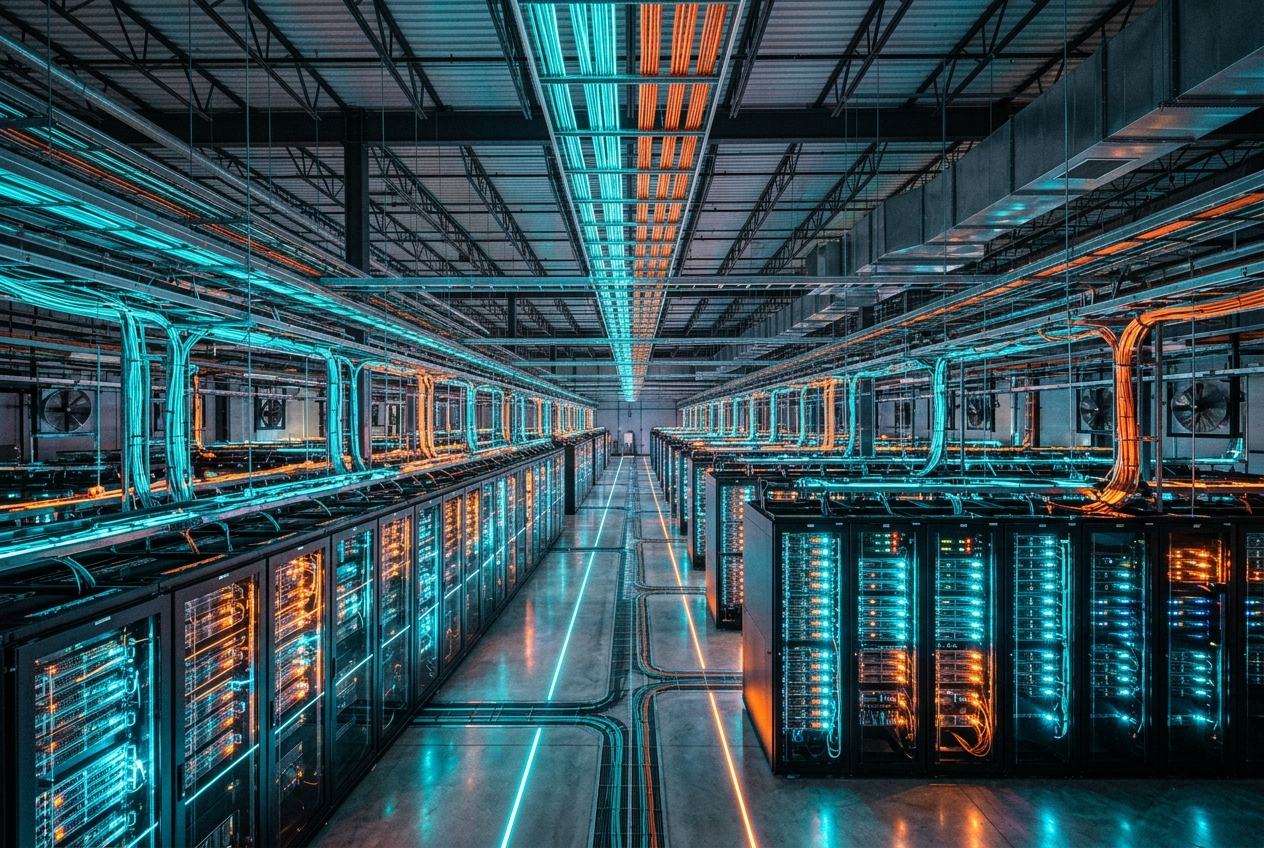
The infrastructure powering the artificial intelligence boom is undergoing a major shift. For years, Nvidia Corporation has enjoyed an almost unchallenged monopoly over the hardware and software stack used to build and train advanced machine learning models. But the tech giants funding the cloud are striking back. Following a similar move by Amazon, Google has launched an open-source framework called TorchTPU, designed to let developers run their AI applications on Google’s custom Tensor Processing Units instead of defaulting to Nvidia graphics cards.
This coordinated push by major cloud providers targets Nvidia’s true superpower: software lock-in. While Nvidia’s silicon is undeniably powerful, its real moat has always been the software ecosystem built around it. By introducing native bridging tools that let developers switch hardware with simple configuration changes, Google and Amazon are trying to make alternative custom silicon a frictionless choice for AI startups and enterprises alike.
📌 Key Takeaways
- Google launched TorchTPU to allow PyTorch AI applications to run on its proprietary Tensor Processing Units without rewriting code.
- Amazon previously released TorchNeuron for AWS Trainium chips and is contributing upstream code to decouple PyTorch from Nvidia’s architecture.
- These tools aim to break developer lock-in caused by Nvidia’s deep historical ties to the PyTorch machine learning framework.
- Enterprise engineering teams now gain better leverage for multi-cloud strategies and infrastructure cost negotiations.
Why Nvidia’s Software Ecosystem Was the Ultimate Moat
To understand why these new releases matter, you have to look at how the modern AI stack was built. PyTorch, an open-source machine learning framework used by an estimated 85% of AI applications, was originally created by Meta back in 2016. That was years before large language models completely transformed technology, at a time when Nvidia GPUs were already the undisputed standard for AI research.
Because PyTorch grew up alongside Nvidia’s hardware supremacy, core features of the framework were engineered specifically to work with Nvidia’s CUDA software libraries and optimizations. This created a powerful default. For years, if an artificial intelligence startup wanted to train a model, writing code for Nvidia architecture was simply the path of least resistance.
Shifting away from Nvidia GPUs historically meant an exhaustive, expensive rewrite of core codebase logic. Engineering teams faced major performance regressions, delayed product roadmaps, and steep migration costs. Nvidia’s hardware dominance was sustained just as much by this software friction as it was by raw chip performance.
How TorchTPU and TorchNeuron Open Up Custom Silicon
Cloud providers are now building direct software bridges to bypass that friction and funnel workloads toward their own custom-built chips:
- Google TorchTPU: This open-source tool lets developers transition existing PyTorch applications onto Google Cloud and TPUs via a simple configuration update. Google collaborated closely with key players in the AI ecosystem—including Hugging Face, vLLM creator Inferact, and SGLang creator RadixArk—to ensure seamless compatibility with popular inference engines and tools.
- Amazon TorchNeuron: Released just prior to Google’s announcement, Amazon’s parallel tool ports applications directly to AWS Trainium chips without requiring code rewrites. Beyond this bridging tool, Amazon is contributing code directly to the core PyTorch project to decouple various features from Nvidia architecture at the source code level.
What This Means for AI Developers and Cloud Procurement
For engineering teams and enterprise procurement departments, these bridging tools change the economics of cloud computing. When generative AI demand surged, Nvidia-based hardware instances suffered from severe supply chain bottlenecks, long wait times, and premium pricing.
With tools that make migrating to Google TPUs and AWS Trainium chips practically painless, companies gain institutional leverage. Multi-cloud strategies suddenly become much more realistic. Development teams can build models inside the familiar PyTorch framework and dynamically route workloads to whichever hardware offers the best availability or cost efficiency at any given moment. However, engineering teams must still verify whether custom silicon supports specialized model architectures or custom kernels required for their production workloads.
The Road Ahead: Entrenched Habits vs. Multi-Cloud Flexibility
Despite these powerful new tools, an immediate, mass exodus from Nvidia is unlikely. Nvidia’s hardware ecosystem, robust software libraries, and decades of developer familiarity remain deeply entrenched across the tech industry.
Furthermore, independent analysts point out that exact adoption metrics and performance benchmarks comparing TPUs and Trainium chips directly against Nvidia’s newest hardware generations are still emerging. Even so, the monopoly days of AI hardware are facing serious pressure. By lowering the barriers to alternative silicon, Google and Amazon have signaled that the future of AI infrastructure will be multi-cloud and fiercely competitive.
Frequently Asked Questions
What is PyTorch?
PyTorch is an open-source machine learning toolkit launched by Meta in 2016. It serves as the foundational framework for building, training, and deploying the vast majority of modern artificial intelligence models.
How does Google’s TorchTPU work?
TorchTPU allows developers to run existing PyTorch applications on Google Cloud’s Tensor Processing Units by making a simple configuration change, eliminating the need to completely rewrite application code.
Are developers going to stop using Nvidia chips entirely?
No. While TorchTPU and TorchNeuron lower the technical hurdles of switching hardware, Nvidia’s extensive software libraries and developer ecosystem ensure it will remain a dominant force in AI hardware for the foreseeable future.
Why did PyTorch favor Nvidia hardware for so long?
PyTorch was built in 2016 when Nvidia GPUs were already established as the standard for AI research. As a result, foundational components of the framework were natively optimized to work with Nvidia systems.
Sources and further reading

Leave a Reply