
Google Drops TorchTPU to Break Nvidia’s AI Software Grip
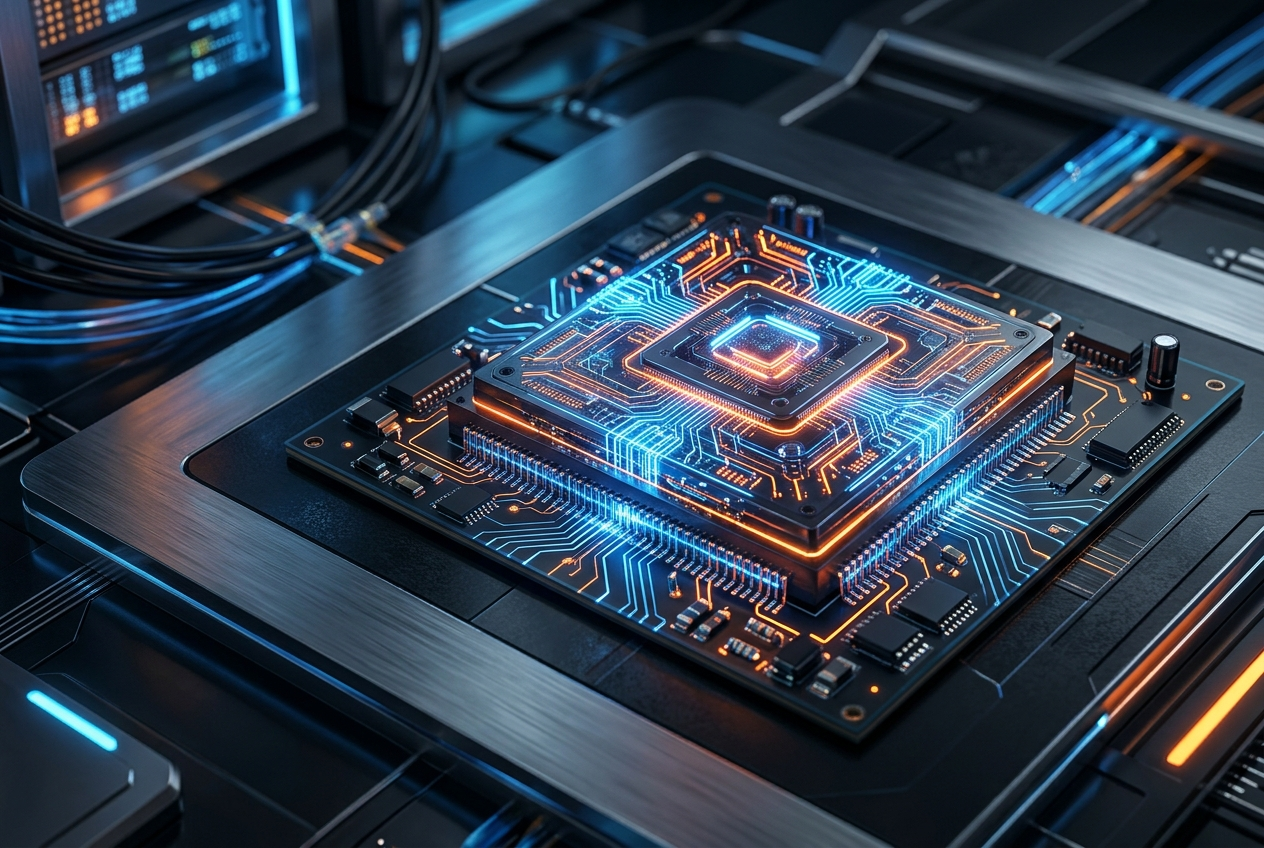
Google is making a direct play for the heart of the artificial intelligence infrastructure market. At the PyTorch Conference, the tech giant open-sourced a new software stack called TorchTPU, designed to let developers run machine learning workloads built in PyTorch directly on Google’s custom Tensor Processing Units (TPUs). The move is a calculated strike against the hardware and software dominance that Nvidia has enjoyed for years.
For developers, the pitch is simple: train, serve, and deploy models using the PyTorch tools you already know, but switch the underlying engine to Google’s specialized silicon without having to rewrite your entire codebase. Coming right on the heels of a similar move from Amazon, this release marks a turning point in how cloud providers are trying to loosen Nvidia’s grip on the AI boom.
📌 Key Takeaways
- Google open-sourced TorchTPU to let developers run PyTorch AI workloads directly on custom TPU hardware.
- The software stack aims to eliminate the massive friction of rewriting code to run on non-Nvidia chips.
- Amazon recently made a parallel move with TorchNeuron, highlighting a broader industry push toward custom silicon.
- Enterprise engineering teams now have a viable path to diversify their cloud infrastructure and optimize training costs.
Why Nvidia’s Software Lock-In Rules the AI Industry
To understand why a software bridge like TorchTPU matters, you have to look at why Nvidia became the undisputed king of AI hardware in the first place. While Nvidia makes exceptionally powerful graphics processing units (GPUs), its true moat is its proprietary software ecosystem—specifically CUDA and its associated developer tools.
For over a decade, almost all deep learning frameworks and models were written natively to leverage CUDA. This created a powerful software lock-in. Even if another company built a faster or cheaper chip, developers hesitated to use it because adapting their codebases to run on unfamiliar, non-standard APIs was an expensive and time-consuming engineering nightmare. Nvidia chips became the default choice simply because their software made them the easiest path of least resistance.
How TorchTPU Works With PyTorch and Google Silicon
Google’s TorchTPU is designed to act as a translator, removing that architectural friction. TPUs are custom application-specific integrated circuits built specifically to handle the crushing matrix math required by large language models and neural networks. However, raw silicon is useless if developers cannot easily talk to it.
By integrating smoothly with PyTorch—Meta’s wildly popular open-source machine learning framework—TorchTPU provides a native-feeling backend. Developers can keep their familiar workflows, dynamic computational graphs, and training pipelines while pointing their workloads at Google’s cloud data center accelerators. It bridges the gap between custom hardware and everyday developer habits.
The Cloud Industry’s Pivot to Custom Silicon
Google is not fighting this battle alone. Just days before the TorchTPU announcement, Amazon Web Services revealed TorchNeuron, an open-source PyTorch backend built for its own proprietary Trainium2 and Trainium3 chips.
These synchronized moves reveal a much larger trend among major cloud providers. Running massive generative AI models at scale is staggering expensive, and relying entirely on a single hardware supplier exposes companies to severe supply chain bottlenecks and high profit margins paid to chipmakers. By investing heavily in their own custom silicon while simultaneously building open-source PyTorch bridges, hyperscale providers are actively building a multi-vendor future for AI infrastructure.
What This Means for Enterprise Development Teams
For chief technology officers and machine learning engineers, these developments change the math around cloud deployment and scaling. Moving away from a standard GPU setup used to involve massive operational risks and code rewrites.
With tools like TorchTPU and TorchNeuron entering the open-source ecosystem, engineering teams can realistically test alternative cloud hardware configurations without committing to complete architectural overhauls. This opens the door to serious cost optimization. Enterprises can shop around for cloud computing resources, diversifying their infrastructure to avoid being cornered by single-supplier pricing models.
At the same time, practical migration requires caution. Enterprise AI depends on a sprawling ecosystem of specialized third-party libraries for quantization, distributed training, and low-latency inference. Organizations are increasingly taking a hybrid approach—keeping legacy training pipelines on proven GPU setups while shifting newer, less complex workloads onto emerging custom silicon backends to build internal expertise.
Frequently Asked Questions
What is TorchTPU?
TorchTPU is an open-source software stack released by Google that allows developers to run PyTorch artificial intelligence workloads directly on Google’s custom Tensor Processing Units with minimal code changes.
Why is Google releasing this tool?
Google aims to counter Nvidia’s dominant software lock-in. By making its custom TPU hardware compatible with popular frameworks like PyTorch, Google lowers the barrier to entry for developers wanting to use alternative cloud accelerators.
How does TorchTPU compare to Amazon’s recent announcement?
Both tools solve the same core problem for cloud providers. While Google introduced TorchTPU for its TPUs, Amazon released a parallel tool called TorchNeuron for its proprietary Trainium chips.
Does this mean developers should immediately abandon GPUs?
Not necessarily. While these tools make migration much easier, engineering teams must still verify that their specific third-party libraries and distributed training extensions are fully optimized for alternative hardware backends.
Sources and further reading

Leave a Reply